|
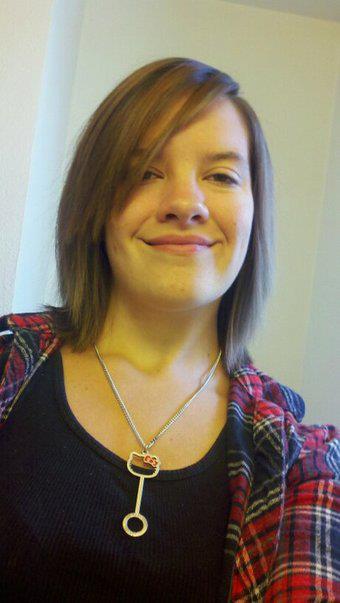
Matty Jacobson edits and contributes to
The Skewed Review. |
THE SKEWED REVIEW |
ARTS & ENTERTAINMENT
Christopher Nolan is one of the most celebrated directors of our time. The ending to "Inception" could arguably be one of the most talked about in cinematic history. And, of course, how can we not consider "The Dark Knight" as one of the best renditions of the Batman universe ever? Yes, Christopher Nolan is a genius. Let's all take a moment to bow down to him, light a candle in his honor, and slaughter the nearest goat in his name.
All done? OK. Now that we're done praising his name and all his glory, let's get down to the reasons why we're all lying to ourselves about Nolan's last installment of his Batman trilogy: "The Dark Knight Rises."
Caution:
THERE ARE SPOILERS IN THIS ARTICLE, and I will undoubtedly offend many of you
Nolanites who are so invested in "The Dark Knight Rises" that you're unwilling to see it's many, many,
many flaws. Since I know you're already gathering your counter-arguments, then
please consider writing a whole article. I will publish it if you write it.
The Successes
First, I'd like to point out the merits of "The Dark Knight Rises." I'm not a total hater, you see. But I am a comic book enthusiast, so when any adaptations leap from the pages of my cheaply printed $2.99 magazine to the big screen, I have the tendency to see how compatible said films are with the books I so love.
Let me start with what many Skewed Review fans might have been waiting for (or at least I'll pretend there are people out there who care about The Skewed Review enough to be waiting for this): Catwoman. Or, rather, Selena Kyle.
 |
Yeah, this sexy bitch.
Oh, and Catwoman, too. |
I am a huge Catwoman fan. I wrote an entire article on
why we should all strive to be like her. Granted, DC Comics has since rebooted the character of Catwoman and put her back in the role of cat burglar, but the message I was portraying in that article still remains pretty relevant. Selena Kyle may be a criminal, but she's got honor.
I was definitely leery of Nolan's decision to cast Anne Hatheway as Selena Kyle, and I pretty much dumped on the decision in
this article that compared every Catwoman that we've seen brought to life. But, I might have spoken too soon.
In all actuality, Hatheway did a pretty good job portraying Catwoman. In fact, I felt as though her story in "The Dark Knight Rises" was lifted beautifully from the pages of Frank Miller's Batman story arc, "
Year One." If you're not a fan of reading, then what are you doing on this website? But seriously, you can see the adapted cartoon film (
not for kids!) that gives you the gist of a Catwoman who's committed to her friends but is out to get big spenders like Bruce Wayne.
 |
Is it just me, or does it look like
Catwoman is tripping Batman? |
There's no doubt that Nolan's version of Selena Kyle was heavily influenced by Miller's Catwoman in "Year One." So, there you go. Well done. Wait, did I say "successes" earlier? Oh. I guess I meant "success." Singular. Even then, I think my approval of Selena Kyle could be chalked up to my having little or no expectations of Nolan's Catwoman to begin with. So I guess I was pleasantly surprised to see Hatheway did so well in the role.
Now onto the reason you're here in the first place: the lies we're telling ourselves. Please note, these all have to do with "The Dark Knight Rises," and not "The Dark Knight." OK? OK.
No. 5: "Batman can exist in the real world!"
Have you seen the so-called "
real life superheroes" that are popping up globally? These people actually dress up in costumes and then prowl the streets. They often end up
getting their asses handed to them by thugs or
facing criminal charges for assault. The proof is legitimate that a costumed vigilante is nothing short of a joke in the real world.
But Christopher Nolan attempted to place Batman in as real a world as possible. That's fine, I guess, except when you look into the pages of a DC comic book and you see images like this:
 |
That's some real world stuff right there. |
OK, fine. That's from one of my "Catwoman" titles (the only book I read now). But she's still in the Batman universe. DC knows that there's a certain amount of camp that needs to go along with costumed superheroes. In order for us to believe that there are legitimate crime fighters out there who feel the need to put on capes, then we need to suspend the belief that the rest of the world goes on with business as usual.
This is where Nolan's universe starts to crumble a bit. He devotes so much energy into making Batman work in the "real world" that, when something campy
does happen, it comes across as laughable rather than believable--at least in "The Dark Knight Rises."
Take, for example, the part part in "The Dark Knight Rises" when Bane tricks the
entire Gotham police force into going into the sewers below the city. Yeah, the
whole force. Now, in a comic book world, this might not be so far-fetched.
In the DC universe, Gotham police are, well, pretty stupid. The only credible person associated with Gotham's Black and Whites who isn't a total dumb ass is Commissioner Gordon. This is the reason we have Batman in the first place. Obviously the people hired to watch over the city are completely incapable of doing it at all, so an emotionally scarred billionaire must pick up the slack.
But in the real world? No authority figure in his right mind would send an entire police force below ground. It would never happen. Even if Jim Gordon was hopped up on morphine in the hospital and gave ridiculous orders, there would be at least someone along the way who would say something like: "Is it really a good idea to have
every single one of us go into the sewers? Shouldn't we at least have half of us stay topside, especially considering there's, like, a whole city full of people that would be left
un-policed?"
Nolan needed to stop trying so damned hard to make Gotham as real as possible and at least allow for some amount of acknowledged camp. Because when you try and sell me a real world situation, then I expect real world actions and consequences.
Of course, too much camp can be, well, too much. I'm not saying Nolan should go the way of Joel Shumacher's rendition of the Batman universe. I think we can all agree that "Batman Forever" and "Batman & Robin" were two atrocities that the world could have done without. But we
can look to Tim Burton's first "Batman" to gauge where good camp can balance out.
Yes, Burton's film is dated, so we must keep that in mind. But it also didn't take itself so seriously that when something comic book-esque happens (like an airplane flying between buildings in order to scoop up giant balloons filled with poison), the audience isn't left thinking, "Wha...? But, I, that wouldn't happen!"
No. 4: "The dialogue was excellent!"
"Talk about an excellent script! All of Bane's monologues were so awesome! Oh, and that exchange between Batman and Bane? Pure genius!" -- Every diluted fanboy on the Internet.
See, here's where allowing your movie to acknowledge its own campiness can come in handy. When a federal government employee sees an internationally most-wanted criminal for the first time and, for argument's sake, shouts, "Why do you wear the mask?!" then it might not come across as out-of-place in a film that, without superheroes, would be about legacy-driven terrorist acts.
But it's not just the
audible dialogue that's an issue (although, it really is a huge issue).
There are whole scenes in the film where, unless you're dedicated to seeing it multiple times, characters speak to each other in ways that are wholly gibberish to a movie-goer. Yes, I get that Bane has to speak through that mask, but I could definitely understand some of his words ("What happens when you take off the mask?!" "It would be extremely painful--for you.")
So that tells me that Bane has the capability to
be understood. So why couldn't he be understood the whole time? Your guess is as good as mine. And I
don't seem to be the only person on earth who agrees that Christian Bale's raspy Batman voice is not only hard to understand, but also just plain goofy. So I'll leave that right there.
Please, someone send me a transcript of that final exchange between Batman and Bane. To me it just sounded like a dog barking at a broken McDonald's drive-thru speaker.
No. 3: "Oscars all around! What superb acting!"
I guess I'm the only one who will admit that Christian Bale came across as completely apathetic to the role. I honestly felt like he didn't want to be in that role. I hope his AT&T bill didn't bankrupt him considering the amount of phoning-in he had to do in order to complete this movie.
But it wasn't necessarily the main characters who drove me nuts. Like I said before, Anne Hatheway was not disappointing. Oscar-worthy? No. And Tom Hardy was pretty good as Bane. I love me some Marion Cotillard, Gary Oldman can do no wrong in my eyes (even though he pretty much did wrong in this movie), and how dare anyone call into question Michael Caine?
Actually, I believe Caine pulled out the best performance of the whole cast. But unless Caine died during filming, I don't think the Academy will be handing him any awards.
But it's the people who
weren't top-billed who I took issue with. I'm talking about the random cops/EMTs/Gothamites Nolan felt the need to zoom in on at various points in the film. For example, when Batman makes his triumphant return (the first of only two times Batman actually appears in the movie), Nolan zooms in on the reactions of police officers and emergency responders. The reaction shots look like bits of a how-to film that might be shown in an improv class.
"See, students? This is what we call 'surprised!'"
The thing is, these reactionary faces happened throughout the entire film. I couldn't figure out why Nolan decided to choose random bad actors and zoom in on their faces. It was like a parade of Overactors Anonymous. Who are these people? Why are they getting this type of screen time?
No. 2: "The plot makes perfect sense."
When Nolan decided to introduce Bane, Catwoman, Robin and Talia Al Ghul into the same story, then he had to at least
attempt to make all the characters fit together in some semblance of the comic book story arcs from which they are borrowed.
For example, Bane is most commonly recognized as
the villain who broke Batman's back, thus putting him out of commission for as long as DC execs decided they'd had enough of their
replacement Batman.
Talia Al Ghul is the daughter of Ra's Al Ghul, and she's actually the mother to Bruce Wayne's kid Damian, who would one day become Robin. And Robin, at least the
first Robin, is Dick Grayson, who, apparently, does not appear in this film. Oh, and then there's Catwoman, the chick who is responsible for doing things like this:
 |
For as many times as this
has happened, I'm surprised
Catwoman isn't a Batman
baby mamma, too.
Oh, wait a minute... |
So in order for Bane to break Batman's back, and for Catwoman to get her some Batmaction, and for Robin to essentially want to become Robin, and for Talia Al Ghul to screw Bruce Wayne, and for Ra's Al Ghul to come back to life (which is his thing in the comic books), we got a rookie cop who knows Batman's identity, convinces him to put his costume back on, but not after Bruce investigates this cat burglar, but also has to beat up a masked terrorist who is screwing Batman's girlfriend who happens to be the daughter of Batman's old nemesis and, oh, Bruce Wayne has to hallucinate Liam Neeson for about seven seconds.
Now, the definition of "contrived" can be found at, let me see, oh--at your local theater. Just go see "The Dark Knight Rises."
No. 1: "This is just as good as, if not better than, 'The Dark Knight!'"
"Batman Begins" was just too "blah" for my taste. In fact, my favorite Batman film doesn't come from Christopher Nolan at all. It's also not Tim Burton's first film, either. I'm unapologetic about my love for "Batman Returns," for this reason alone:
 |
Pussy never looked so good. |
But, after "Batman Returns" and "Batman," I'd have to say that "The Dark Knight" is my third-favorite Batman flick. Does it suffer a bit because of the whole "this is the real world" thing? Yeah, but it wasn't so bogged down with campy comic book characters that the film came off as ridiculous. The fact that the one character, Joker, was the primary villain for the better portion of the film aided in the reality of that universe.
I will argue to this day that Heath Ledger wouldn't have got an Oscar if he hadn't died. Was his portrayal of The Joker eerie and compelling? Yes. But was it Oscar-worthy? I don't think so. But despite the sympathy award, I still love "The Dark Knight."
So it's making me a little confused when I hear fanboys saying "The Dark Knight Rises" is better. I'm sorry, but it's not. In the universe that Christopher Nolan created, "TDKR" would need to be one villain short in order to be cohesive with the rest of the franchise.
There was just too much going on in the newest film. I'm just sad that so many people behave like such sheep and give "TDKR" such praise when it doesn't deserve it. It was OK. It just wasn't this fabulous cinema treasure that warrants such fanboy praise that one can't help but think these Internet junkies are sitting at their computers without pants 24/7 in anticipation of giving "Dark Knight Rises" as much praise as possible.
But, since I know there are some of you out there who disagree with me, please take this opportunity to
submit your own article. I guarantee I'll publish it as long as you stick to the guidelines.